Looking Ahead at AI Discovery Signals
A plain-language AI Symantix lab follow-up on whether AI crawler activity and machine query hits can act like early warning signals before search impressions move.
The Short Version
This lab note looks at a simple idea: machine activity may sometimes show up before human search visibility improves. That does not prove AI crawlers cause more impressions. It does suggest they may be useful early signals.
Think of it like weather radar. Radar does not create the storm. It helps you see the storm forming before you feel the rain. AI crawler hits and machine query hits may work the same way for search visibility.
The Question We Tested
The working question was simple:
When AI systems and good bots show more interest in a page, do search impressions often rise shortly after?
This is part of the Exposure Velocity thesis. Exposure Velocity says that discoverability can grow before clicks, traffic, or business results show up.
What A Leading Indicator Means
A leading indicator is a signal that may appear before another result. It is not proof by itself. It is a clue worth watching.
For this experiment, the possible leading signals are AI crawler requests, good bot requests, and machine-shaped search queries. The result we are watching is search impressions in Google Search Console.
What The Warehouse Showed
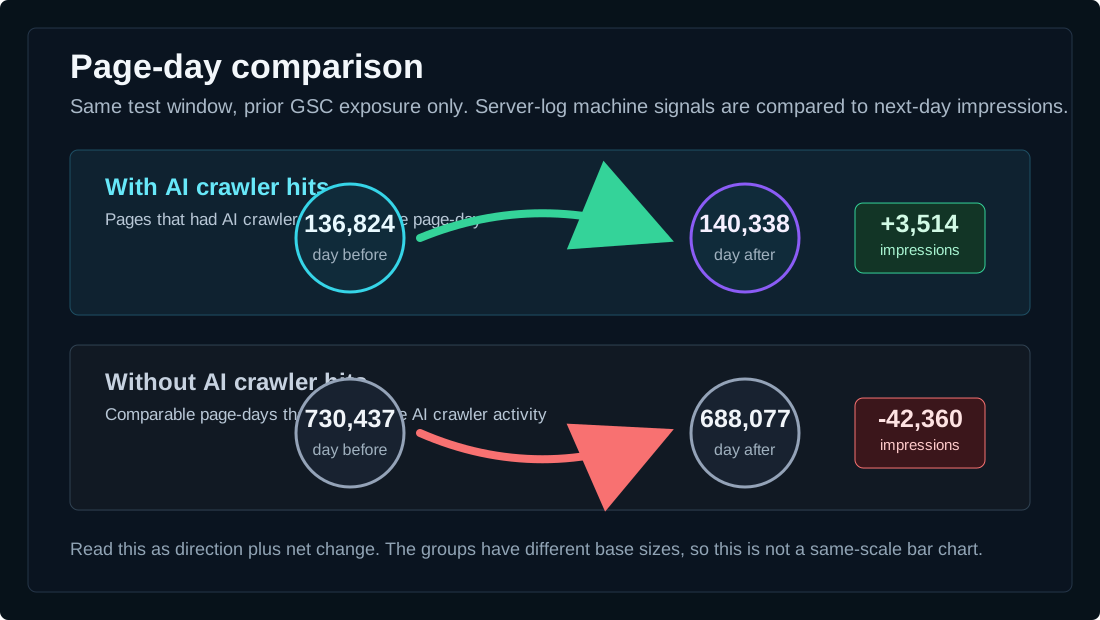
The Digital Karma Data Warehouse compared page-days with AI crawler activity against page-days without AI crawler activity. A page-day means one page on one date.
- AI-hit page-days with prior GSC exposure moved from 136,824 impressions the day before to 140,338 impressions the day after. That is a gain of 3,514 impressions.
- Comparable page-days without AI crawler hits moved from 730,437 impressions the day before to 688,077 impressions the day after. That is a drop of 42,360 impressions.
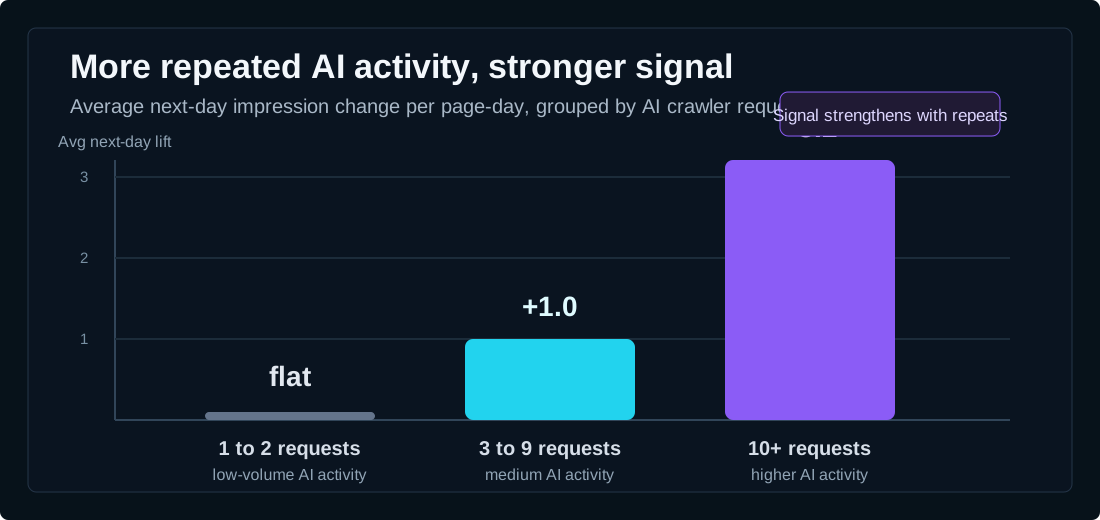
- Low-volume AI activity, 1 to 2 requests, was basically flat.
- Medium AI activity, 3 to 9 requests, averaged about 1 more next-day impression per page-day.
- High AI activity, 10 or more requests, averaged about 3.2 more next-day impressions per page-day.
That pattern is not final proof, but it is meaningful enough to keep testing. The signal gets more interesting when AI activity is repeated or heavier.
How Machine Query Hits Fit
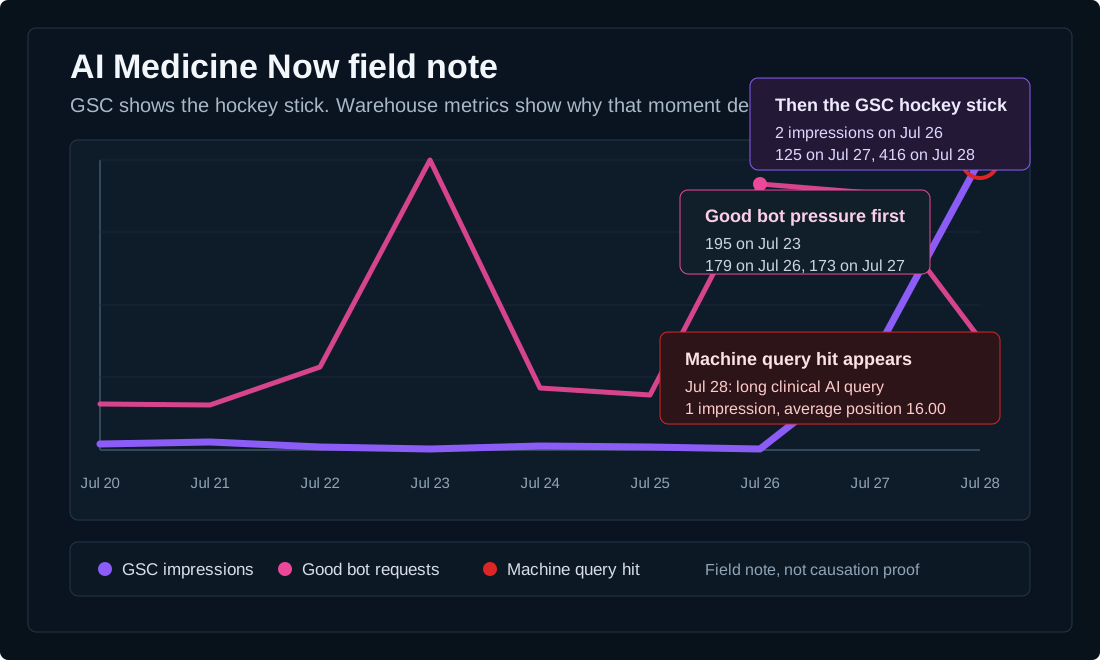
Machine query hits are bot requests on pages that also had machine-shaped GSC queries on the same day. On the dashboard, they now show beside regular query metrics so they can be compared row by row.
In the first machine query slice, the Warehouse saw 284 machine-query days and 1,153 machine hits. Same-day impressions were much higher than the previous day or next day: 226 before, 517 on the same day, and 227 after.
That means machine hits are useful as a correlation note. They show that machine-shaped searches and bot activity are happening around the same queries. They do not yet prove a clean one-day lead.
What This Supports
This supports the leading indicator hypothesis in a careful way. It suggests that AI discovery signals can show up before or around impression movement.
The strongest version is not "AI hit equals ranking boost." The stronger and safer version is this:
When AI systems repeatedly crawl, test, and request a page, that page may be entering a wider discovery path before clicks arrive.
That fits the Exposure Velocity idea. Exposure comes first. Discovery comes later. Authority and business outcomes come after that.
What This Does Not Prove
This does not prove that AI crawlers cause Google impressions to rise. Google Search Console data arrives later than server logs, and bot requests can happen for many reasons.
The timing also needs caution. If GSC is delayed by a day or two, AI can look like it is ahead even when the reporting systems are partly out of sync.
So the right claim is not causation. The right claim is a testable pattern: AI crawler activity, good bot activity, and machine query hits may help identify pages where exposure is starting to move.
Why This Matters For Dataset Sites
AI Symantix is the lab, but this pattern may matter most on dataset-style sites. Those sites publish structured information for crawlers, search engines, and AI systems to read.
If a dataset page starts getting machine attention before it gets human clicks, the page may still be gaining value. It may be entering retrieval systems, entity maps, search indexes, and answer pipelines before normal traffic reports notice anything important.
What To Watch Next
- Compare AI crawler hits to impressions 1 day, 2 days, and 7 days later.
- Separate one-off bot hits from repeated bot interest.
- Watch query rows where impressions and machine hits rise together.
- Track top movers across AI Symantix, DataSetSEO, and other public dataset properties.
- Keep clicks outside Exposure Velocity, but show them beside it as a later outcome.
Recommended SVG Graphics
The article would be stronger with simple SVG graphics that explain the timing and signal layers without making the idea look more certain than it is.
- Lead Lag Timeline: A three-lane timeline showing AI crawler hit, GSC impression rise, and click outcome. Mark day 0, day 1, and day 2.
- Exposure Velocity Funnel: Four stages: Exposure, Discovery, Authority, Acquisition. Put AI crawlers, good bots, indexed assets, and impressions inside Exposure. Put clicks in Discovery.
- AI Request Bucket Bars: Three bars for 1 to 2, 3 to 9, and 10 or more AI requests, with the next-day impression lift beside each bar.
- Machine Hits Query Table Callout: A small table row showing query, impressions, machine hits, CTR, and position. Highlight machine hits as the comparison metric.
- Top Movers Sparkline Grid: A compact grid where each row is a page, with tiny before, same-day, and after impression lines next to AI request count.
Use a dark background, cyan for AI crawler activity, violet for impressions, amber for movement or position, and red only for machine-hit flags. Keep labels short so the graphics work on mobile.
Bottom Line
The early data supports a useful hypothesis: machine discovery signals may help us see exposure growth before normal traffic metrics make it obvious.
That is enough to keep watching. It is not enough to call it proven. The next step is to repeat the test across more dataset sites and keep separating correlation from cause.
Data Graphics For This Test
Frequently Asked Questions
What is an AI discovery signal?
An AI discovery signal is a sign that a machine system, crawler, or search engine is finding and testing a page before normal traffic results appear.
Do AI crawler hits prove impressions will rise?
No. AI crawler hits do not prove cause and effect. They are useful clues that should be compared against later search impressions and clicks.
Why are machine query hits useful?
Machine query hits help show when bot activity and machine-shaped search queries are happening around the same topic or page.
How does this relate to Exposure Velocity?
Exposure Velocity measures growing discoverability before clicks arrive. AI crawler activity and machine query hits may become useful early inputs for testing that growth.